Brunel University courtyard gardeners guide
If you are responsible for a courtyard at Brunel University, or you simply help keep one looking sharp, you already know it is never just "a few plants and a sweep up." Courtyard spaces work hard. They frame entrances, soften hard landscaping, handle foot traffic, and quietly set the tone for the whole site. This Brunel University courtyard gardeners guide brings together the practical bits that matter: upkeep, planting choices, seasonal routines, safety, presentation, and the small details that make a courtyard feel cared for rather than merely cleaned.
Truth be told, courtyards can be deceptively demanding. One wet week and you have slippery paving, tired bedding, leaves collecting in corners, and planters that suddenly look half-empty. One dry spell and you are back checking irrigation, shade levels, and soil moisture. The good news? With a sensible routine and the right priorities, courtyard maintenance becomes far easier to manage. This guide walks you through what to do, why it matters, and how to keep standards consistent without overcomplicating the job.
For readers looking into ongoing support, it may also help to review the wider garden maintenance approach and the broader services overview so the courtyard sits neatly within the rest of the site's outdoor care.
Table of Contents
- Why Brunel University courtyard gardeners guide Matters
- How Brunel University courtyard gardeners guide Works
- Key Benefits and Practical Advantages
- Who This Is For and When It Makes Sense
- Step-by-Step Guidance
- Expert Tips for Better Results
- Common Mistakes to Avoid
- Tools, Resources and Recommendations
- Law, Compliance, Standards, or Best Practice
- Options, Methods, or Comparison Table
- Case Study or Real-World Example
- Practical Checklist
- Conclusion
- Frequently Asked Questions
Why Brunel University courtyard gardeners guide Matters
A university courtyard is not a private garden. That distinction changes everything. You are balancing visual appeal, safety, access, drainage, usability, and a very real need for low-disruption upkeep. People are walking through at all hours, sometimes with luggage, bikes, food, phones, or notebooks in hand. Surfaces need to stay tidy. Planting needs to survive pressure. Rubbish cannot linger. And the space has to look welcoming even on a grey Tuesday morning in February. Not exactly a passive job.
The value of a courtyard gardeners guide is that it turns a broad maintenance task into a clear routine. Instead of reacting when something looks messy, you work from a plan. That plan should cover regular inspections, pruning, watering, sweeping, edging, seasonal tidy-ups, and replacement planting when needed. It should also help you spot little problems before they become expensive ones, such as blocked drainage, compacted soil, broken irrigation fittings, or plants that are failing because they are in the wrong place.
There is also a reputation angle. Courtyards often sit near reception areas, academic buildings, or social spaces. A well-kept space quietly says that the campus is organised and cared for. A neglected one does the opposite. You notice it immediately, even if you cannot quite put your finger on why. Plants droop, edges blur, hard surfaces stain, and the whole place feels a bit forgotten.
For many sites, the courtyard is where first impressions happen. That is why the maintenance standard has to be steady, not heroic. A little bit often beats a big panic clean every few months. Every time.
How Brunel University courtyard gardeners guide Works
At its core, courtyard maintenance works through repetition, observation, and simple prioritisation. Start with the visible basics, then move into the details that keep the space healthy. A courtyard usually includes some mix of paving or hard standing, planters, shrubs, seasonal bedding, maybe a lawned edge or decorative border, and often lighting, seating, or adjacent decking. Each element needs a slightly different kind of attention.
The best way to think about it is in layers:
- Daily or near-daily checks for litter, hazards, obstructions, and obvious damage.
- Weekly care for sweeping, deadheading, light weeding, checking pots, and edge definition.
- Monthly review of plant health, soil moisture, drainage, and any wear on hard landscaping.
- Seasonal work such as pruning, planting refreshes, mulching, and deeper cleaning.
That sounds straightforward, and in practice it is, but the discipline matters. If you let one area slide, the whole courtyard starts to look tired. Fallen leaves go from "just autumn" to stained paving. A few weeds become a border problem. A planter without feed or water loses its colour very quickly. Then someone says the courtyard looks uncared for, and fair enough, they are not wrong.
Good courtyard gardening also means choosing plants and materials that suit the environment. Some courtyards are sheltered and shaded, others are exposed to wind tunnels between buildings. Some have poor soil depth under planters, others have reflective heat from brick or stone. You do not treat all of them the same. That is where practical judgement matters more than a glossy planting scheme.
If you are comparing support options, look at whether the team understands the difference between routine upkeep and more involved work such as hedge trimming, lawn mowing, or even broader landscape gardening when the courtyard needs a deeper refresh rather than simple maintenance.
Key Benefits and Practical Advantages
A good courtyard care routine does more than keep things neat. It reduces risk, protects planting, and makes the whole space easier to manage over time. That is the practical truth of it.
- Better first impressions: Clean paving, tidy edges, and healthy planting make an immediate difference.
- Lower slip and trip risk: Regular sweeping and debris removal help keep walkways clear.
- Longer plant life: Consistent care prevents stress, disease spread, and avoidable dieback.
- Less reactive spending: Small jobs handled early often cost less than one large corrective project.
- More usable space: Staff, students, and visitors are more likely to use a courtyard that feels pleasant and safe.
- Better seasonal resilience: A courtyard that is planned well copes better with heat, rain, frost, and heavy footfall.
There is another advantage people sometimes miss: consistency makes decision-making easier. Once you know what "good" looks like for the courtyard, it becomes simpler to judge whether a new planter, paving repair, or planting scheme actually improves the space. It stops being guesswork.
Expert summary: Courtyard gardening works best when the space is treated like a living frontage, not a standalone bed. Keep it safe, keep it tidy, and keep the planting realistic. That combination is what lasts.
Who This Is For and When It Makes Sense
This guide is useful for facilities teams, estates managers, grounds staff, and anyone responsible for exterior presentation around a university building. It also helps if you are coordinating contractors and want to ask better questions before work starts. A little knowledge goes a long way here. You do not need to be a horticulturist to spot when a maintenance plan is too vague or too optimistic.
It makes sense to bring in structured courtyard care when you notice any of the following:
- the planting looks inconsistent from week to week
- litter, leaves, or weeds are building up quickly
- the courtyard gets heavy daily footfall
- the space is used for meetings, waiting, or social use
- there are drainage, staining, or moss issues on paving
- the site needs a professional finish for visitors, open days, or term-time routines
Sometimes the trigger is simple embarrassment. Someone from outside walks through and you think, "Hmm, this should look better." That is usually enough reason to tighten the routine.
It is also worth noting that courtyard gardening can sit alongside wider grounds work. If the site includes larger landscaped zones, comparing courtyard priorities with landscaping or combining them with garden clearance after seasonal build-up can make the whole campus easier to keep under control.
Step-by-Step Guidance
Here is a practical, no-fuss way to approach courtyard maintenance. You can scale this up or down depending on budget, size, and usage.
1. Start with a baseline inspection
Walk the courtyard slowly. Look for trip hazards, dead plants, uneven surfaces, blocked drains, stained areas, moss, broken containers, and signs of pests or disease. Do this in daylight if possible. Morning light is especially useful because it shows shadow, puddles, and surface grime more clearly.
2. Separate hard landscaping from soft landscaping
Hard landscaping means paving, walls, planters, seating, steps, and decking. Soft landscaping means soil, grass, shrubs, trees, bedding, and climbers. They do not fail in the same way, so they should not be maintained in the same way. A cleaned paving area can still look tired if the planting is weak, and a beautiful bed can be undermined by stained stone or litter.
3. Prioritise safety first
Before you focus on appearance, deal with anything that could cause an accident. Wet leaves, loose edging, broken pots, or spongy patches in the soil all deserve attention. If tree work is involved, or branches are hanging low over a route, it may be time to look at tree lopping and removal. That is not a job to shrug off.
4. Restore the edges
Edges are the secret to a tidy courtyard. Clean lines between beds and paving, trimmed overhang, and neat container displays make a bigger difference than many people expect. A courtyard can be in good health but still look messy if the edges are blobby and undefined. Simple thing, big payoff.
5. Refresh planting where needed
Replace tired plants in a way that suits the light and use of the courtyard. If the space is shaded, focus on shade-tolerant plants. If it is hot and reflective, choose hardy types that will not sulk every time the sun appears. Containers should never look overcrowded or, just as bad, half-empty for months on end.
6. Build the routine around the calendar
Seasonal work matters. Spring is a reset. Summer is about watering, feeding, and deadheading. Autumn is leaf management and pre-winter tidying. Winter is inspection, drainage, pruning where appropriate, and preventing surfaces from turning slippery and sad-looking. You do not need drama. You need rhythm.
7. Record what changes
A small log helps a lot. Note what was pruned, replaced, cleaned, or repaired, and when. That way, if the same planter keeps failing or a patch keeps flooding, you can spot the pattern instead of guessing. Boring? Maybe. Useful? Absolutely.
Expert Tips for Better Results
These are the little things that separate an acceptable courtyard from one that consistently looks polished.
- Use resilient planting near paths: Courtyard edges take knocks, so avoid delicate plants where people brush past them every day.
- Choose containers with proper drainage: Beautiful pots are no help if they trap water and rot the roots.
- Keep one eye on sightlines: Low planting can soften a space without blocking visibility or making corners feel hidden.
- Mulch properly: It helps retain moisture and suppress weeds, but only if it is applied neatly and not piled against stems.
- Clean little and often: A five-minute sweep every day or two can save a lot of time later.
- Match the maintenance to the usage: A quiet internal courtyard and a heavily used entrance space should not be maintained to the same schedule.
If the courtyard includes seating or timber features, it may be worth aligning the overall care plan with decking services so surfaces and planting feel like part of the same design rather than disconnected elements.
One more thing: do not overplant just because the area feels small. Courtyards can get crowded fast. It looks lush for a fortnight, then all the plants start competing, and suddenly nobody is happy. Less can be more, honestly.
Common Mistakes to Avoid
Most courtyard issues are not dramatic failures. They are the result of small oversights repeated over time. That is why they are so annoying.
- Ignoring drainage: If water sits after rain, it will usually keep sitting there until someone investigates properly.
- Using the wrong plants: A plant that looks lovely in a nursery may be a poor fit for shade, wind, pollution, or tight roots.
- Letting containers dry out too much: Pots can go from fine to bone-dry faster than people expect, especially in summer.
- Forgetting seasonal changes: A courtyard that works in April may look bare, dry, or cluttered in November.
- Overlooking maintenance access: If nobody can get a mower, trolley, or waste bags into the area easily, the routine will always be harder than it should be.
- Trying to do everything at once: A big tidy-up is useful, but without ongoing maintenance the space slides back quickly.
Another classic mistake is treating courtyard care like one task instead of a series of micro tasks. A sweep, a check, a deadhead, a quick weed pull, a look at the drains. That's the work. All the glamorous stuff is secondary, if we are being honest.
Tools, Resources and Recommendations
You do not need a van full of specialist kit to keep a courtyard in shape, but the right basics make the work faster and more reliable.
| Tool / Resource | Best Use | Why It Helps |
|---|---|---|
| Stiff broom or sweeper | Paving, entrances, and path edges | Removes debris before it becomes slippery or unsightly |
| Bypass secateurs | Deadheading and light pruning | Gives cleaner cuts and helps plant health |
| Hand trowel and cultivator | Container planting and weeding | Useful in tight, shallow spaces |
| Watering cans or hose system | Dry spells and new planting | Keeps planting alive and steady |
| Leaf rake | Autumn and windy periods | Speeds up cleanup without damaging beds |
| Maintenance log | Routine tracking | Helps you spot repeat issues and plan work |
| Quality compost and mulch | Planting refresh and soil care | Supports moisture retention and appearance |
Depending on the courtyard layout, you may also need support with general upkeep tasks such as lawn mowing or structured garden maintenance if the space forms part of a wider grounds schedule. And if the site has become cluttered after a busy term or a storm, garden clearance can be the quickest way to restore order before the more detailed work begins.
For practical planning, it also helps to think in terms of disposal and sustainability. Good garden waste handling matters. If the contractor or in-house team separates green waste sensibly, reuses viable materials, and avoids unnecessary trips, the job becomes tidier and more responsible. That links naturally with a broader recycling and sustainability approach.
Law, Compliance, Standards, or Best Practice
Courtyard gardening at a university usually sits inside wider duties around safety, access, and competent maintenance. The exact arrangements depend on the site, but a few principles are worth keeping in mind.
First, maintenance work should be carried out by people who understand the risks involved. Wet paving, sharp tools, lifting, working near students or staff, and operating equipment in confined spaces all need sensible control. Good contractors should be able to explain their approach to safety, and it is reasonable to ask. If you are comparing suppliers, reviewing their health and safety policy and insurance and safety information is a perfectly normal step.
Second, access and inclusivity matter. Courtyards are often routes as well as destinations. Surfaces should remain as even and clear as practical, and plant choices should not reduce visibility or narrow access needlessly. If a space is being used by a wide mix of people, a maintenance plan should keep that in mind. It sounds obvious, but obvious things are the ones that get skipped when people are busy.
Third, universities often expect contractors to follow site rules around waste, noise, arrival times, and safeguarding. These may be practical rather than legal points, but they matter in day-to-day delivery. You do not want hedge work on a busy entrance path if it can be scheduled for a calmer window. It just makes life easier for everybody.
Finally, terms, payment arrangements, and complaint handling should be clear before work starts. That prevents awkward conversations later. If needed, it is sensible to review the provider's pricing and quotes, payment and security, and complaints procedure so expectations are set properly from day one.
Options, Methods, or Comparison Table
Not every courtyard needs the same kind of care. Some are best handled with routine maintenance, while others need periodic soft landscaping updates or a complete reset. The right option depends on the condition of the space and how it is used.
| Method | Best For | Strengths | Limitations |
|---|---|---|---|
| Routine maintenance | Courtyards already in decent condition | Predictable, low disruption, keeps standards steady | Won't fix deeper design or drainage issues |
| Seasonal refresh | Spaces that look tired at certain times of year | Improves appearance without a full redesign | Temporary if underlying care is weak |
| Targeted landscape work | Courtyards needing structural changes or planting redesign | Can transform function and appearance | More planning and budget required |
| Clearance and reset | Overgrown, cluttered, or neglected spaces | Fast way to regain control | Needs follow-up maintenance or the problem returns |
If the courtyard needs a stronger visual transformation, it may make sense to combine maintenance with broader landscaping work. For example, changing the planting structure, improving circulation, or simplifying bed shapes can make ongoing care much easier. And if timber features are part of the design, coordinating them with decking services can help the whole area feel cohesive.
To be fair, the "best" option is often a mix. A courtyard might need a clearance, then a planting refresh, then steady monthly maintenance. Real life rarely fits into a neat box.
Case Study or Real-World Example
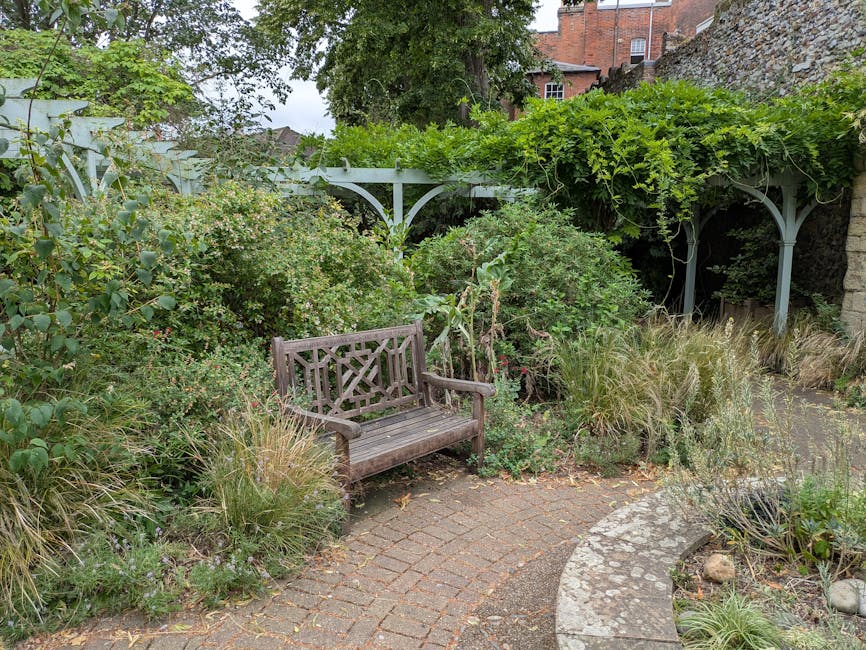
Imagine a small internal courtyard used by students moving between lectures. It has paving, a few planters, a bench, and a narrow planting strip along one wall. At first glance it looks fine. But over a few weeks the leaves gather in corners, one planter dries out repeatedly, and the bench area starts to feel cluttered. Nothing disastrous. Just enough to make the space feel a bit neglected.
The practical response is simple. First, sweep and clear the debris, then inspect drainage and watering patterns. One planter may be getting more sun and wind than the others, so it needs hardier planting or more frequent watering. The edge near the bench might need a low, durable plant instead of something that flops into the walkway. Once the maintenance routine is in place, the space starts to hold its shape again. People use it more. It feels calmer. You can actually hear the difference too - less rustle of debris underfoot, fewer little complaints, fewer "someone should really sort this out" comments in passing.
That is the thing with courtyard gardening. Small adjustments often have a bigger visual effect than bigger, flashier changes. A tidy, well-planned courtyard can make an entire building feel more welcoming. It does not shout. It just works.
Practical Checklist
Use this as a straightforward working checklist for courtyard upkeep. It is not fancy, but it gets the job done.
- Inspect paving, edges, steps, and entrances for hazards
- Remove litter, leaves, and loose debris
- Check planters for dryness, damage, and poor drainage
- Deadhead and lightly prune where needed
- Pull weeds before they spread
- Confirm access routes stay clear
- Look for moss, staining, or pooling water
- Review plant health and replace weak specimens
- Check benches, timber features, and adjacent surfaces
- Record any recurring issues for follow-up
- Schedule seasonal work before the weather turns
Quick rule of thumb: if you would hesitate to let a visitor walk through it, it probably needs attention sooner rather than later.
Conclusion
A well-kept university courtyard is one of those spaces people notice without always realising why. It quietly supports movement, presentation, and day-to-day comfort. The best courtyard care is not about grand gestures. It is about steady routines, sensible planting choices, good safety habits, and the willingness to deal with the small things before they become the big ones.
If you are planning or improving courtyard maintenance at Brunel University, focus first on the basics: clear access, healthy planting, tidy edges, and a schedule that matches real use. After that, the finer details become much easier to manage. And once the space starts working properly, you will feel it immediately. It just breathes better.
If you need a practical next step, start by reviewing the current condition of the courtyard, noting the recurring problem areas, and deciding whether the space needs routine care, a seasonal refresh, or a more substantial reset. A measured plan now saves stress later, which is always the nicer way round.
Get a free quote today and see how much you can save.
For a closer look at the team, you can also read about us before deciding how you want the work handled.
Frequently Asked Questions
What does a courtyard gardener actually do?
A courtyard gardener keeps the space tidy, safe, and healthy. That usually includes sweeping, weeding, pruning, watering, deadheading, checking drainage, and replacing tired planting when needed.
How often should a university courtyard be maintained?
That depends on how much foot traffic it gets, but most courtyards benefit from frequent light attention and regular scheduled maintenance. Small, consistent visits usually work better than occasional big tidy-ups.
What plants work best in a courtyard setting?
The best plants depend on light, shelter, and space. Courtyards often suit compact, resilient plants that cope well with changing moisture, reflective surfaces, and regular pedestrian use.
Why do courtyard plants fail so often?
Usually it is one of three things: poor watering, the wrong plant in the wrong spot, or poor drainage. Sometimes all three. Courtyards can be a bit unforgiving like that.
Is courtyard gardening the same as landscaping?
Not quite. Courtyard gardening focuses more on routine care and planting maintenance, while landscaping is broader and may include redesign, hard surfaces, structural features, and planting schemes.
Do courtyards need special safety checks?
Yes, they should be checked for trip hazards, slippery surfaces, loose materials, blocked drainage, and any features that could affect safe access. In a busy university environment, that matters a lot.
When is the best time to refresh a courtyard?
Season changes are often the best moments, especially spring and autumn. That is when planting can be renewed, debris can be cleared, and the space can be adjusted for the months ahead.
Can a courtyard be low-maintenance and still look good?
Absolutely. In fact, that is the sweet spot. The trick is choosing durable planting, using sensible containers, and keeping the routine simple but consistent.
How do you stop a courtyard from looking cluttered?
Keep the planting plan restrained, define the edges clearly, and remove items that do not serve a purpose. Clutter builds slowly, so it helps to review the space regularly and stay slightly ruthless.
What should I ask before hiring courtyard gardeners?
Ask how they handle safety, watering, seasonal changes, waste removal, scheduling, and ongoing maintenance. If the courtyard is part of a wider site, it is sensible to ask how they coordinate with other services too.
Do I need clearance work before maintenance starts?
Sometimes yes. If the courtyard is overgrown, blocked, or full of debris, a reset may be needed first. After that, maintenance becomes much easier and more effective.
How can I keep a courtyard tidy between visits?
Use short, regular checks. Pick up litter, remove visible weeds, empty debris, and keep an eye on watering. A few small actions can prevent a lot of mess later on.
Where do sustainability considerations fit in?
They fit into waste handling, plant selection, and how often materials are replaced. Sensible reuse, recycling, and durable planting choices all make courtyard care more responsible over time.
What if the courtyard has timber features or decking?
Then the maintenance plan should include those surfaces as well as the planting. Hard materials and soft planting work best when they are cared for together, not as separate jobs.
If you want to learn more about the team behind the service, visit the about us page or explore the wider services overview to see how courtyard care fits into a broader maintenance plan.